


Porcelain Gains Popularity
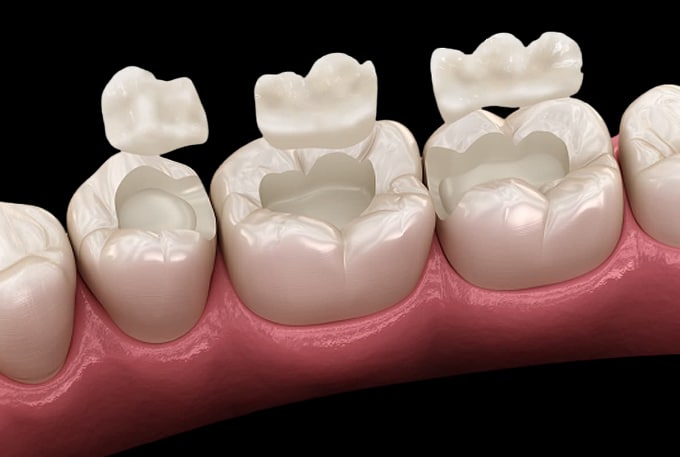
If more than half of a tooth's biting surface is damaged, a dentist may opt for an inlay or onlay as a dental restoration. These restorations can be crafted from porcelain, gold, or composite resin and are attached to the damaged area of the tooth. An inlay is placed inside the cusp tips of the tooth, similar to a filling, while an onlay is a larger reconstruction that covers one or more cusps of the tooth. While gold has traditionally been the preferred material for inlays and onlays, porcelain has become more popular in recent years for its strength and ability to blend in with the natural color of teeth.
How are inlays and onlays put in place?
The process of getting inlays and onlays usually involves one or two visits to the dentist. In the first appointment, the dentist will remove any old fillings or damaged parts of the tooth and prepare it for the inlay or onlay. An impression of the tooth will be taken and sent to a lab for custom fabrication. A temporary sealant will be applied, and a follow-up appointment will be scheduled.
During the second visit, the temporary sealant will be removed, and the dentist will ensure that the inlay or onlay fits correctly. If the fit is good, the inlay or onlay will be bonded to the tooth using a strong resin and polished for a smooth finish.
Consider these factors when selecting inlays and onlays:
Inlays and onlays offer a better alternative to traditional fillings by strengthening natural teeth. They are bonded directly to the tooth using strong resins, increasing the tooth's strength by up to 75 percent. These restorations can last between 10 to 30 years, making them a long-lasting option. Onlays are particularly beneficial for situations where a full dental crown is not needed.